Pages

Sunday, March 3, 2013

The Facts and Financial Impact of Brain Tumors

According to the National Brain Tumor Society over 688,000 people are living with primary tumors of the brain and central nervous system in the nation.  Of these 138,000 are malignant and 550,000 are nonmalignant tumors.  That number has increased from 612,000 in 2004.  Metastatic tumors originate in other parts of the body and then may spread to the spinal cord or brain but primary tumors of the CNS originate in the brain or spinal cord.  Brain tumors are usually treated by surgery, radiation therapy or chemotherapy.  There has not been much progress in finding new treatments. 

The American Cancer Society's statistical figures indicate that about 23,100 malignant tumors of the brain or spinal cord will be diagnosed in 2013, in the U.S. this figure includes both adults and children.  In adults a meningioma is the most prevalent type of brain tumor and a glioblastoma is the most common and deadliest primary malignant brain tumor.  The second leading cause of cancer deaths in children are brain tumors. 

In a 2006/07 survey study The National Brain Tumor Foundation found that many patients that are diagnosed with a brain tumor undergo deep financial burdens.  The financial impact can be felt by the whole family as many tumor survivors may not be able to return to work.  Medication costs and high insurance premiums were a major concern.  Even when patients were out of treatment they were still spending anywhere from $250-$1000 in out of pocket expenses each month.  Although 91% of the patients were employed before being diagnosed only 33%  were employed after being diagnosed.  Caregivers continued working in larger numbers only 16% quit their jobs.  There was a 300% increase in the amount of people reporting to be in the lowest income bracket post-diagnosis.  Over the long term it appears that few were prepared for the high costs of brain tumor treatment and beyond.  Some patients and their families had to sell their cars, take on credit card debt, cash in on retirement savings and even sell their homes.

Patients with brain tumors should feel free to ask social workers at their medical institution for assistance in regards to their financial inquiries.  The National Brain Tumor Society lists a few organizations that can give some financial support such as the American Cancer Society.
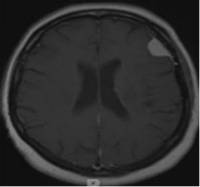


convexity meningioma
Convexity Meningioma


Saturday, February 16, 2013

The Cost of Cancer

One of the top three killers in the U.S. is cancer it is of no surprise that the disease comes with a huge financial burden.  According to the National Cancer Institute at the National Institute of Health medical expenditures for cancer are expected to reach $158 billion (not adjusted for inflation) by 2020 a 27% increase from 2010.  If more expensive treatments continue to emerge medical expenses could rise in the $200 billion range.  These estimates do not include the cost of lost productivity and other related costs.  The researchers from the NCI based their projections from recent data on cancer survival and cost of care.  The chart below shows that breast cancer is at the top of the list with a direct cost of $16.5 Billion followed by colorectal, lung, lymphoma and prostate cancer.

Preventing cancer is a priority according to Robert Croyle, Ph.D., director, Division of Cancer Control and Population Sciences, NCI "The rising costs of cancer care illustrate how important it is for us to advance the science of cancer prevention and treatment to ensure that we’re using the most effective approaches."

Although deaths from cancer have fallen in the U.S. between 1990-2009 pancreatic cancer death rates have been increasing. 

On a global scale cancer's economic cost surpasses all other diseases according to the American Institute for Cancer Research.  Globally the cost of cancer is $895 billion this figure includes the economic losses from premature death and disability but excludes direct medical costs.  Cost effective solutions include the reduction of risk factors such as smoking, drinking, lack of exercise and an unhealthy diet.

According to the American Cancer Society about 50 million people were uninsured in 2010. The lack of health insurance can prevent many Americans from getting medical care at the right time.  Speaking to your medical team, anticipating costs such as traveling expenses and reaching out to organizations such as the ACS to help with financial burdens is the best way to protect yourself and family from cancer costs.


National Costs for Cancer Care in 2010 in Billions of Dollars by Cancer Site*


Cancer SiteDirect Costs(in billions of dollars)
All Sites$124.57
Breast (female)$16.50
Colorectal$14.14
Lung$12.12
Lymphoma$12.14
Prostate$11.85
Leukemia$5.44
Ovary$5.12
Brain$4.47
Bladder$3.98
Head and Neck$3.64
Kidney$3.80
Uterus$2.62
Melanoma$2.36
Pancreas$2.27
Stomach$1.82
Cervix$1.55
Esophagus$1.33
*More information at http://costprojections.cancer.gov/


Saturday, February 9, 2013

What About Deflation?

The last time the U.S. experienced deflation was during the Great Depression.  Deflation is a general decline in prices caused by the reduction of credit and money supply.  In 2009 we got a little taste of deflation the average inflation rate for the year was -0.4%. During the Great Recession the housing and stock market lost about half its value; a sign of declining prices. 

The media and economists warn consumers and investors to prepare for rising inflation. Yet there are experts that believe the opposite is true claiming that the amount of debt outstanding in the world is pretty much unpayable.  Another reason why deflation should not be ignored is that the velocity of money has been slowing down.

You don't want to hold debt during a deflationary period:

If a consumer has credit card debt which he is repaying at 14.99% interest the amount of interest will rise as deflation starts accelerating making the loan more expensive.  During periods of deflation companies lower prices and that leads to lower wages. This eventually leads to default making bonds undesirable. 

If companies are lowering prices and consumers are spending less that can only mean a reduction in profits.  A reduction in profits for companies holding plenty of debt can only mean lower stock prices that is why investors should evade stocks during deflation. 

Deflation may not pose a real threat but if it does come about a smart investor does not need to fear.  Information is the true hedge!  During deflation cash is king so is gold.  Inflation eats up your money on the other hand deflation increases the value of your money risk free.  The moral of the story is don't panic during deflation.  Stay liquid my friends.


                                            U.S. Historical Inflation Rates 1929-1939

YearJanFebMarAprMayJunJulAugSepOctNovDecAve
1929-1.20.0-0.6-1.2-1.20.01.21.20.00.60.60.60.0
19300.0-0.6-0.60.6-0.6-1.8-4.0-4.6-4.0-4.6-5.2-6.4-2.3
1931-7.0-7.6-7.7-8.8-9.5-10.1-9.0-8.5-9.6-9.7-10.4-9.3-9.0
1932-10.1-10.2-10.3-10.3-10.5-9.9-9.9-10.6-10.7-10.7-10.2-10.3-9.9
1933-9.8-9.9-10.0-9.4-8.0-6.6-3.7-2.2-1.5-0.80.00.8-5.1
19342.34.75.65.65.65.52.31.53.02.32.31.53.1
19353.03.03.03.83.82.22.22.20.71.52.23.02.2
19361.50.70.0-0.7-0.70.71.52.22.22.21.41.41.5
19372.22.23.64.45.14.34.33.64.34.33.62.93.6
19380.70.0-0.7-0.7-2.1-2.1-2.8-2.8-3.4-4.1-3.4-2.8-2.1
1939-1.4-1.4-1.4-2.8-2.1-2.1-2.1-2.10.00.00.00.0-1.4