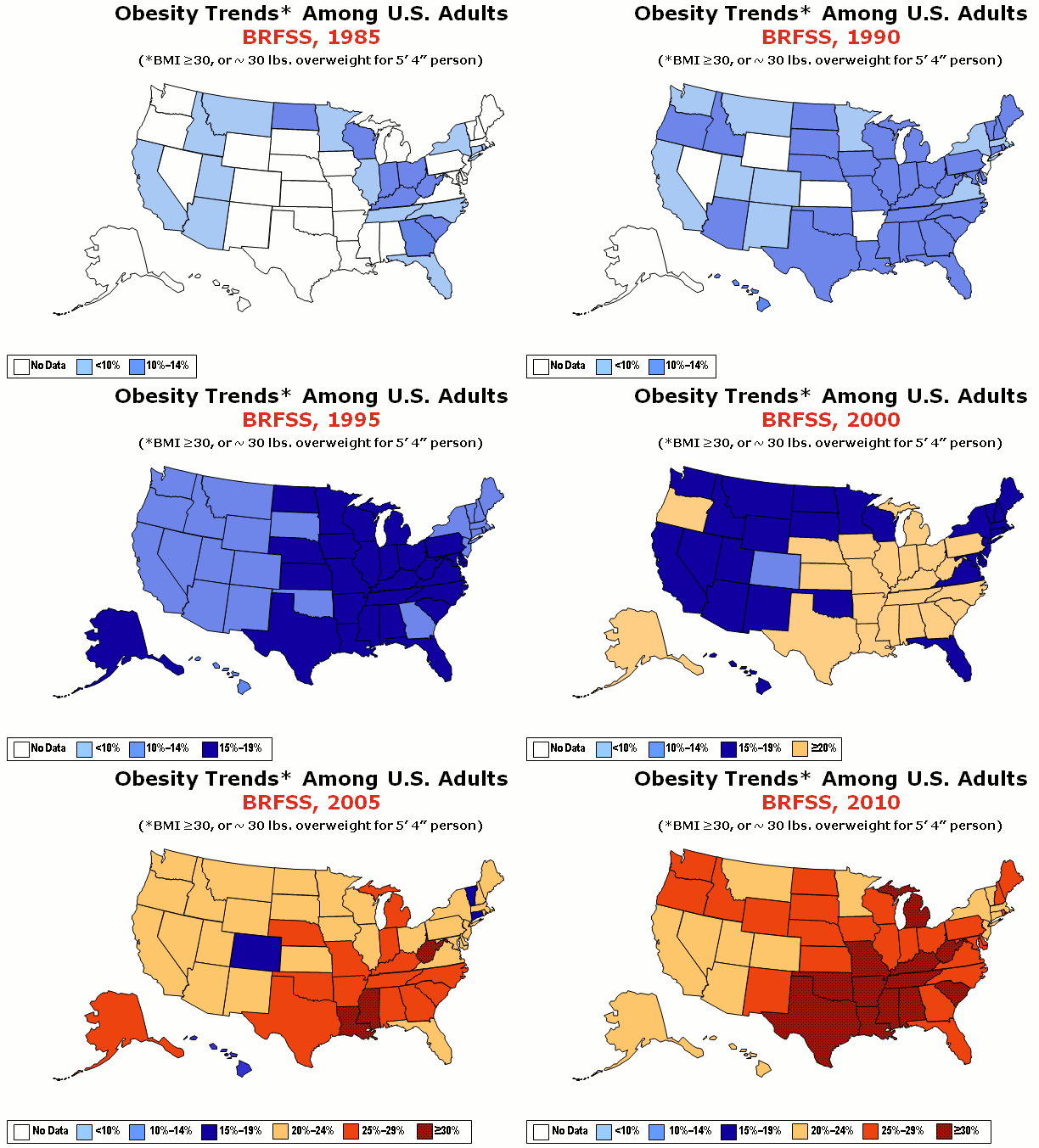
Obesity has become a big problem in America not only does it add a huge cost to the already troubled health care system but it most importantly puts people at a higher risk for heart disease and stroke. Pinpointing the major factor that has led to the ascent of weight in the U.S. population is debatable but we can get an idea as to why: lack of exercise, lack of education, bigger food portions, technology, anxiety and unemployment. Having a sedentary lifestyle in a world ruled by computers and fast food spells disaster to one's health. We live in an environment where all our major life activities can be done from home with little if any physical activity. We can work from home, pay bills and do banking, get entertainment (Netflix, Youtube), eat (Domino's, Fresh Direct), socialize (FB, Skype, Text) and shop with very little physical activity.
According to the Center for Disease Control obesity has increased in every state according to their Overweight and Obesity Data. In 2011 Colorado had the lowest percentage of obesity cases 20.7% and Mississippi had the highest 34.9%. There are ways to help us with the fight against the pounds supplements that suppress appetite and shakes that fill us with protein, their efficiency debatable, if the obesity gets out of hand then bariatric surgery is the alternative. The FDA has not approved a drug treatment for obesity in 10 years until now Qysmia from Vivus (VVUS) and Belviq from Arena Pharmaceuticals (ARNA). Vivus is trying to get approval for the drug to be carried in retail pharmacies so far it has beat Belviq by being the first to reach the market through mail order pharmacies, in 2013 Belviq is expected to go on sale. Both stocks have seen their share of high volatility but Vivus has had quite the roller coaster ride its 52 week range 8.60 - 31.21 says it all. In September the stock was at 24 now it trades in the 14 point range the rise was in anticipation of sales the drop came after news that Europe would not recommend Qysmia due to concerns about safety.
Both drugs have their challenges ahead there is controversy in regards to which of the two drugs is more safe and which is more effective. As with pharmaceutical companies and their stock prices there are times when FDA approval sends the stock to the moon, then reality kicks in when sales come in lower than expected lassoing the stock back down from the clouds. We saw it happen with Human Genome Sciences and their treatment for lupus (Benlysta) investors that held on to the stock took the loss as HGSI is no longer listed GlaxoSmithKline (GSK) acquired them. Vivus is likely to miss the analyst forecast for sales in the fourth quarter based on the amount of prescriptions doctors have written so far according to IMS Health, it will report third quarter results on November 6th. In the midst of the battle of the two drugs another challenger emerges Orexigen Therapeutics (OREX) with its two candidates Contrave which has completed its phase III clinical trials and Empatic which has completed its phase II clinical trials. Both are combination drugs that treat obesity both drugs use Bupropion which acts on the weight control circuit by stimulating the POMC neuron it is believed to increase the level of dopamine activity in certain receptors in the brain and thus lower appetite. Mutations in the POMC gene have been associated with obesity and adrenal insufficiency. Contrave if approved can be a game changer in the fight against obesity since it addresses the reward system in the brain that causes food cravings.
Pages
Thursday, November 1, 2012
Sunday, October 28, 2012
Europe's Situation Worsens
With Greece a few weeks away from running out of cash and with unemployment at 25.10% a deal must be reached soon to unleash more aid for the country. Greece is just one of many problems Europe is facing, for over a year the zone has been experiencing a rise in unemployment which is currently at 11.40%. Italy has seen its unemployment rate rise to 10.7% over the last year and Spain is struggling at 25.02%. Portugal has also experienced rising unemployment currently at 15% and Ireland's has also risen with rates at 14.8%. Poland has improved a bit yet its unemployment is at 12.4%, the U.K. and Germany have also shown some signs of improvement with rates below 8%.
The European scene has affected domestic companies in the U.S., Ford (F) has been feeling the heat, for the past 5 years car sales have fallen. Not hard to believe given that some European countries have seen their unemployment rates rise for the last 5 years straight. Ford plans to close down plants to handle the lack of demand one of them in Belgium. The European recession is strong and the debt crisis is no where nearly fixed, investors must be prepared for the repercussions and panic that this may continue to bring to markets.
The Nordic countries have also been affected by the European debt crisis but not as severe they have relatively low unemployment rates and are seen as safe havens in financial markets. Denmark's unemployment rates are at 4.7%, Norway has improved with rates at 3% and Sweden also has seen rates fall to 7.4%. According to Helge J. Pedersen, Nordea's Global Chief Economist "the Nordic countries emerge as clear winners of the economic beauty contest with the Euro area. However, even the Nordic countries are facing challenges in terms of sustainable growth years."
The European scene has affected domestic companies in the U.S., Ford (F) has been feeling the heat, for the past 5 years car sales have fallen. Not hard to believe given that some European countries have seen their unemployment rates rise for the last 5 years straight. Ford plans to close down plants to handle the lack of demand one of them in Belgium. The European recession is strong and the debt crisis is no where nearly fixed, investors must be prepared for the repercussions and panic that this may continue to bring to markets.
The Nordic countries have also been affected by the European debt crisis but not as severe they have relatively low unemployment rates and are seen as safe havens in financial markets. Denmark's unemployment rates are at 4.7%, Norway has improved with rates at 3% and Sweden also has seen rates fall to 7.4%. According to Helge J. Pedersen, Nordea's Global Chief Economist "the Nordic countries emerge as clear winners of the economic beauty contest with the Euro area. However, even the Nordic countries are facing challenges in terms of sustainable growth years."
Sunday, October 14, 2012
Market Outlook
A year has passed and the news continue to be the same despite this investors may start considering an entry point to either short stocks if they believe the market will drop or start buying if they believe the worst is behind. Slow global growth is expected to affect earnings from multinational companies and this will set the tone for the coming weeks as to where money should be allocated. Bonds are yielding 1.66%, CD's are below 1% and gold has been hovering in the high $1700's. It pretty much comes down to staying in cash or getting into stocks.
The European crisis is still a concern although it has been ignored for a while as the market (^DJI) climbed to $13,661.90 breaking a major point of resistance in September. Traders who had the chutzpah to short the market seeing it hit a 5 year high were rewarded quickly. There may be more downside in the coming days and a sell off which investors have been waiting for to get in. The fiscal cliff is a concern that can take the U.S. economy back into recession early next year if politicians do not make a deal that would evade the high tax hikes.
Some strategist have been recommending small cap companies on the Russell 2000 as they represent domestic companies and have more upside during the next few years despite global concerns. If traders believe that the economy will improve and that the market will not drop below 13000 they can start buying stock as soon as the release of corporate earnings when they will get a feel of the sentiment building up for stocks. Whichever way the market starts moving in the coming weeks getting in by increments if at all is the best way to go. A lot of people are still in cash for the time being, they are right to be weary specially when they have experienced large losses in a relatively short time period. Not all the latest news are bad the consumer sentiment report released last Friday shows a surge, consumer sentiment rose to 83.1. The jobless claims report last Thursday saw a 30k drop which is a big improvement but will still need to be confirmed by reports in the coming weeks. In the end it all comes down to timing risk correctly that's what separates the winners from the losers.
The European crisis is still a concern although it has been ignored for a while as the market (^DJI) climbed to $13,661.90 breaking a major point of resistance in September. Traders who had the chutzpah to short the market seeing it hit a 5 year high were rewarded quickly. There may be more downside in the coming days and a sell off which investors have been waiting for to get in. The fiscal cliff is a concern that can take the U.S. economy back into recession early next year if politicians do not make a deal that would evade the high tax hikes.
Some strategist have been recommending small cap companies on the Russell 2000 as they represent domestic companies and have more upside during the next few years despite global concerns. If traders believe that the economy will improve and that the market will not drop below 13000 they can start buying stock as soon as the release of corporate earnings when they will get a feel of the sentiment building up for stocks. Whichever way the market starts moving in the coming weeks getting in by increments if at all is the best way to go. A lot of people are still in cash for the time being, they are right to be weary specially when they have experienced large losses in a relatively short time period. Not all the latest news are bad the consumer sentiment report released last Friday shows a surge, consumer sentiment rose to 83.1. The jobless claims report last Thursday saw a 30k drop which is a big improvement but will still need to be confirmed by reports in the coming weeks. In the end it all comes down to timing risk correctly that's what separates the winners from the losers.
Subscribe to:
Posts (Atom)